
Energy-Efficient Siding Replacement & Installation
The Connected Exterior
Your roof, siding, gutters, and insulation working together as one system to protect your home.
The “Whole-Home” approach ensures your exterior functions as a unified shield. By synchronizing these four components, we eliminate the structural rot and energy leaks that occur when individual systems fail to work in harmony against Michigan’s extreme seasons.
Engineered for the Michigan Climate
Standard siding often fails in the Great Lakes region because it isn’t rated for our specific environmental stressors. We install premium vinyl and composite systems engineered for:
- Freeze-Thaw Resistance: Michigan winters cause materials to expand and contract rapidly. Our installation techniques and high-grade polymers prevent the cracking and “buckling” common in lower-quality siding.
- UV Stability: Intense summer sun can cause dark siding colors to fade unevenly. Our products feature advanced UV inhibitors to maintain a “fresh-paint” look for decades.
- Impact Durability: From wind-driven debris to heavy hail, our .044″ thickness vinyl and fiber-cement composites provide a high-impact barrier that protects your home’s structural framing.
Our Precision Installation Process
- Full Tear-Off & Inspection: We remove all old materials to inspect the underlying sheathing for hidden wood rot or mold.
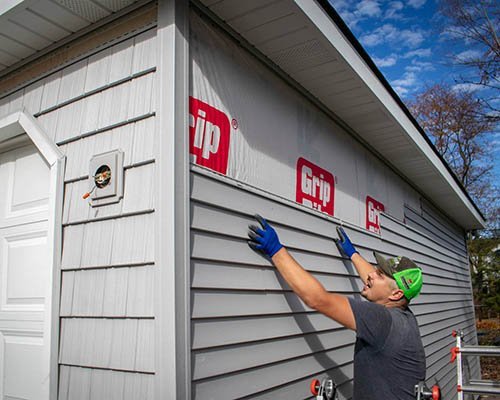
- The Thermal Envelope: We apply a high-performance “house wrap” and seal all seams with specialized tape to create a moisture-tight, wind-resistant barrier.
- Precision Hanging: Siding is “hung” rather than nailed tight, allowing the panels to move naturally during Michigan’s temperature swings without warping.
- Integrated Trim & Flashing: We install custom-bent aluminum coil stock around windows and doors to ensure water is directed into the gutter system, not your walls.
Investment & Value
New siding is one of the highest-return home improvements you can make. Because every home has a unique footprint and material preference, costs can vary. For a detailed breakdown of labor, materials, and regional averages, please visit our [Pricing Page].
Siding Warning Signs
Warping or Buckling
Indicates moisture is trapped behind the panels.
Fading or Peeling
Signs that the UV protection has expired.
High Energy Bills
Often caused by lack of insulated "house wrap" or thin siding.
Frequent Painting
If you are painting every 3 years, it’s time for low-maintenance vinyl.
Frequently Asked Questions
How long does vinyl siding last in Michigan?
Quality vinyl siding installed correctly typically lasts 30 to 40 years in Michigan. The key word is “correctly.” Siding that is installed without a proper moisture barrier, or that uses lower-gauge panels not rated for Michigan’s freeze-thaw cycles, can begin to warp, crack, and fade within 10 to 15 years. We install premium-grade vinyl with a minimum .044 thickness and a full house wrap system underneath.
What is the difference between vinyl siding and composite siding?
Vinyl siding is made from PVC plastic and is the most common and cost-effective option. It is low-maintenance, does not rot or absorb moisture, and is available in a wide range of colors and profiles. Composite siding is made from a blend of wood fiber and resin, which gives it a more authentic wood-grain appearance and greater impact resistance. Composite costs more than vinyl but holds paint better and is less likely to crack in extreme cold. We carry both and can walk you through which is the better fit for your home’s style and your budget.
Will new siding help with my energy bills?
Yes, when installed with proper insulated backing. Insulated vinyl siding adds a layer of rigid foam directly behind the panel, which eliminates the thermal bridging that occurs through standard wall studs. This can reduce heating and cooling loss through exterior walls by 20% or more. We can add insulated backing to any siding installation and will show you the R-value difference before you commit.
What happens to the old siding during installation?
We perform a complete tear-off of the existing siding before installing new material. This is not optional — installing new siding over old siding traps moisture, adds unnecessary weight to the wall, and hides any rot or water damage that needs to be addressed. During tear-off, we inspect every inch of the underlying sheathing for soft spots, rot, or mold. Any damaged wood is replaced before the new siding goes on.